A plain-language explanation of the two analytical methods behind every purity claim: HPLC for how much target peptide is present, and MS for confirming its identity.
Why Purity Is the Central Quality Metric
For a research peptide, purity is the single most important quality metric because impurities are experimental variables. Related peptide fragments, deletion sequences, and residual synthesis byproducts can all influence results if they go unmeasured.
A stated purity figure only means something when it is backed by the analytical method used to measure it. That is why credible manufacturers report purity alongside the technique and the underlying data, not as a bare number.
Purity and Identity Are Two Different Questions
It is essential to separate two concepts that are often blurred. Purity asks: what percentage of this material is my target peptide? Identity asks: is this material actually the peptide I ordered? A sample can be highly pure but be the wrong compound, or be correctly identified but contaminated.
HPLC can address a purity question while mass spectrometry can address identity. When those results are required, confirm that the actual lot documentation reports the relevant methods and data rather than relying on a catalog claim.
How HPLC Measures Purity
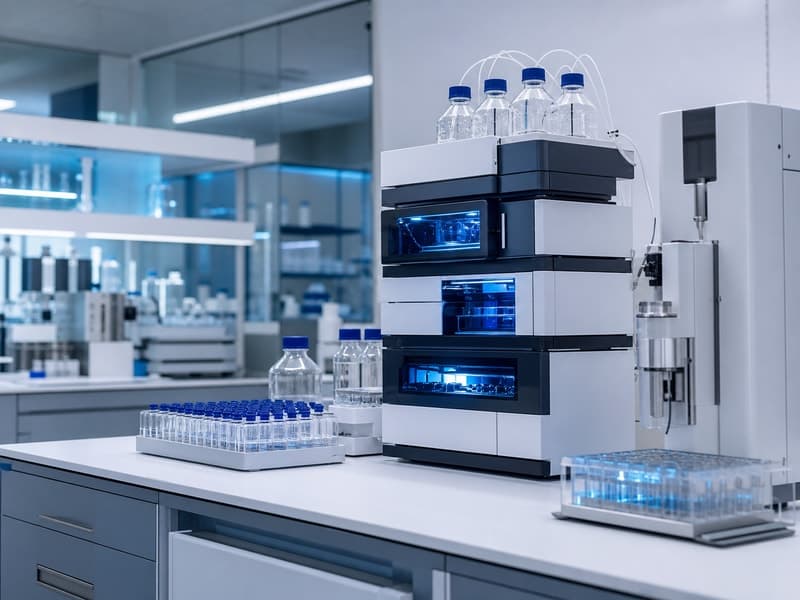
High-Performance Liquid Chromatography (HPLC) separates the components of a sample as they pass through a column at different speeds. The target peptide and any impurities emerge at different times, producing a chromatogram of peaks.
The area under the main peak, relative to the total area of all peaks, gives the purity percentage. A clean chromatogram dominated by a single sharp peak with minimal surrounding peaks indicates high purity.
- Sample is injected and carried through a separation column
- Components separate by their chemical interaction with the column
- A detector records each component as a peak over time
- Main peak area ÷ total peak area = purity percentage
What ≥99% Purity Actually Means
A purity of ≥99% by HPLC means that, of all the material detected, at least 99% is the target peptide and less than 1% is combined impurities. This is a demanding specification and reflects tight control over synthesis and purification.
It is important to note the qualifier "by HPLC," because purity is method-dependent. A reputable COA always states the method and ideally includes the chromatogram so the peak profile can be inspected directly rather than taken on trust.
How Mass Spectrometry Confirms Identity
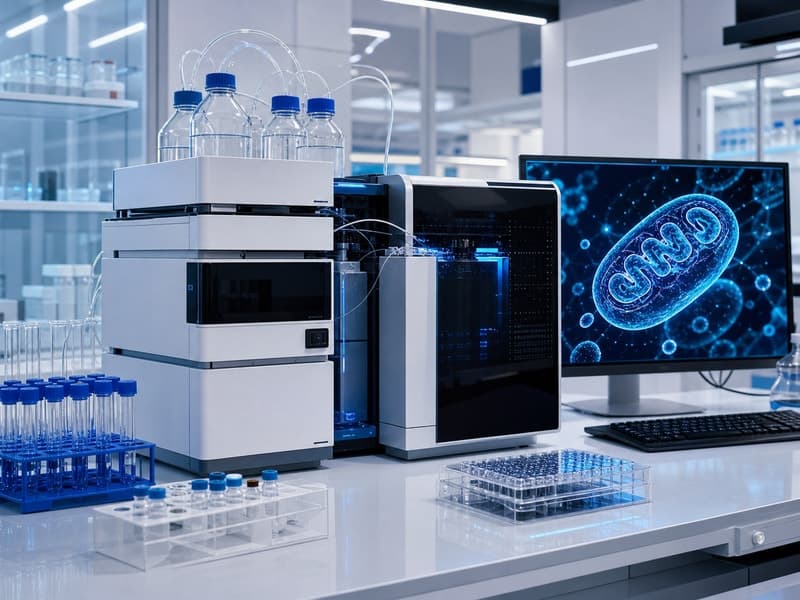
Mass spectrometry (MS) measures the mass-to-charge ratio of a molecule, allowing its molecular weight to be determined with high precision. For a peptide, the observed molecular weight is compared against the theoretical weight calculated from its amino acid sequence.
When the observed and theoretical values match within a small tolerance, identity is confirmed. If they differ, it can signal a wrong sequence, a modification, or a synthesis error — which is exactly why MS is run in tandem with HPLC.
Reading the Data on a COA
On a well-constructed COA, the HPLC section shows the purity percentage and often the retention time and chromatogram, while the MS section shows the theoretical and observed molecular weights alongside the mass spectrum.
When evaluating a supplier, look past the headline number to the actual traces. A single dominant HPLC peak and a matching MS value together are far stronger evidence than a percentage printed in isolation.
From Analysis to Reproducible Research
Verified purity and confirmed identity are what make a peptide a controlled research input rather than an unknown. When every batch is characterized the same way, results become comparable across experiments and over time.
For any supplier, a headline specification should be checked against the methods and results reported for the actual lot. Ask for the relevant document before ordering when analytical evidence is part of your procurement criteria.
Key takeaways
- 01HPLC measures how much target peptide is present; MS confirms it is the right peptide.
- 02≥99% purity means impurities total under 1% by the HPLC method — always note the method.
- 03Inspect the actual chromatogram and mass spectrum, not just the headline percentage.
- 04Consistent HPLC+MS characterization per batch is what makes research reproducible.
Frequently asked
What does 99% purity mean for a research peptide?+
Why are both HPLC and mass spectrometry needed?+
How is peptide identity confirmed by mass spectrometry?+
Research Use Only. This article is educational and describes research-use materials only. Flintmarrow products are not drugs or supplements and are not for human or veterinary use.
Need product or lot details confirmed?
Browse USD pricing where published, then ask about current specifications, available documents and shipping for your order.